On this page:
- Drupal AI Context first release candidate
- What RC 1 means for Context Control Center
- QA and release readiness
- Administration and user experience
- Context selection, scopes and configuration
- Performance, compatibility and upgrade stability
- From beta to 1.0
- Community integrations
- AI CKEditor
- AI Translate
- AI Validations
- Help test RC 1
- Thanks to the contributors
- Next stop: 1.0

Drupal AI Context first release candidate
The first release candidate (RC 1) of Drupal AI , also known as Context Control Center (CCC), is now available.
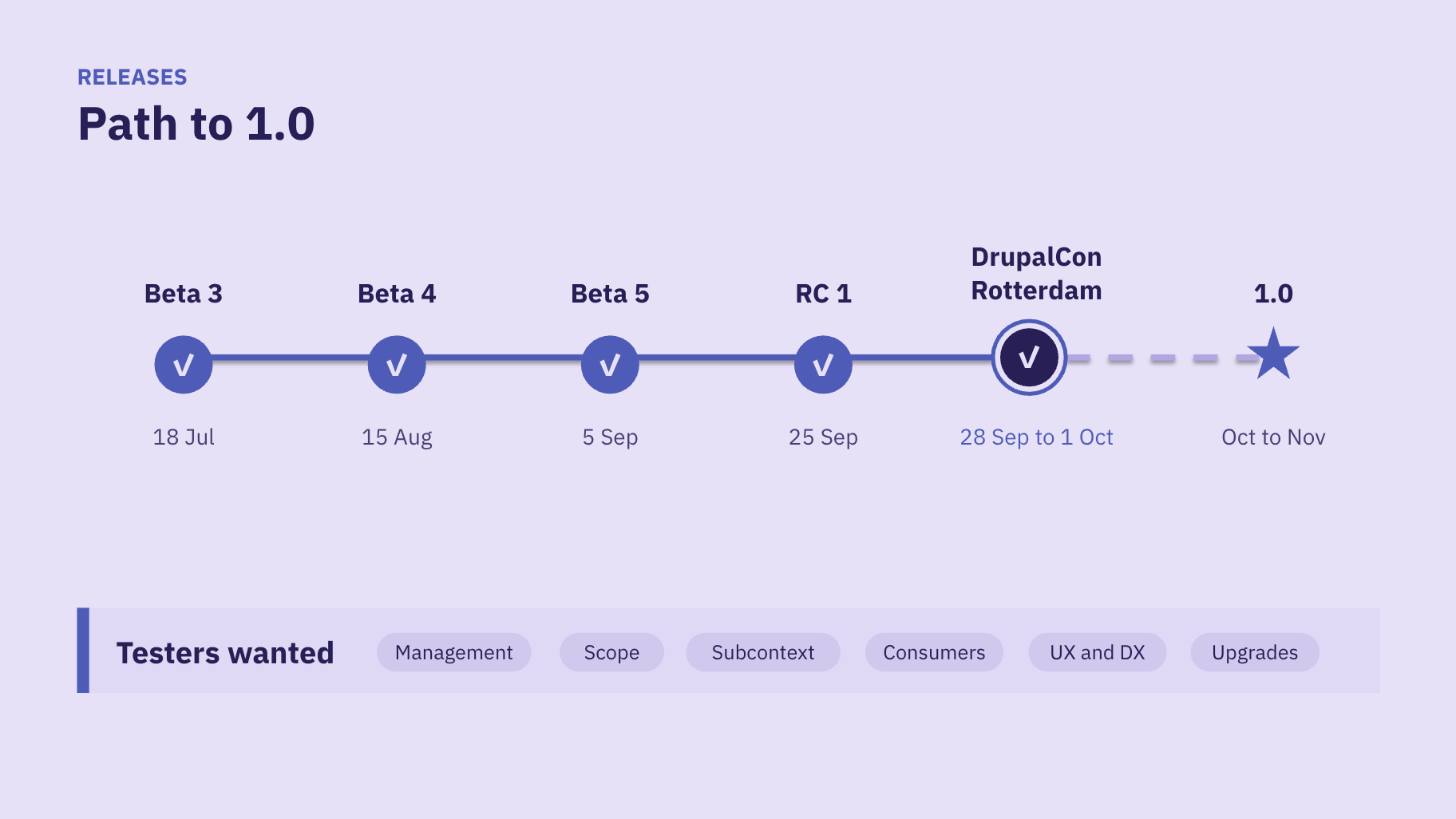
This is a major milestone for the project. After five beta releases and months of community testing, refinement and expansion, RC 1 marks the final stage before the first stable 1.0 release.
We’re currently planning to release CCC 1.0 in about a month, subject to what we learn from testing the release candidate. There may also be an RC 2 release prior to 1.0.
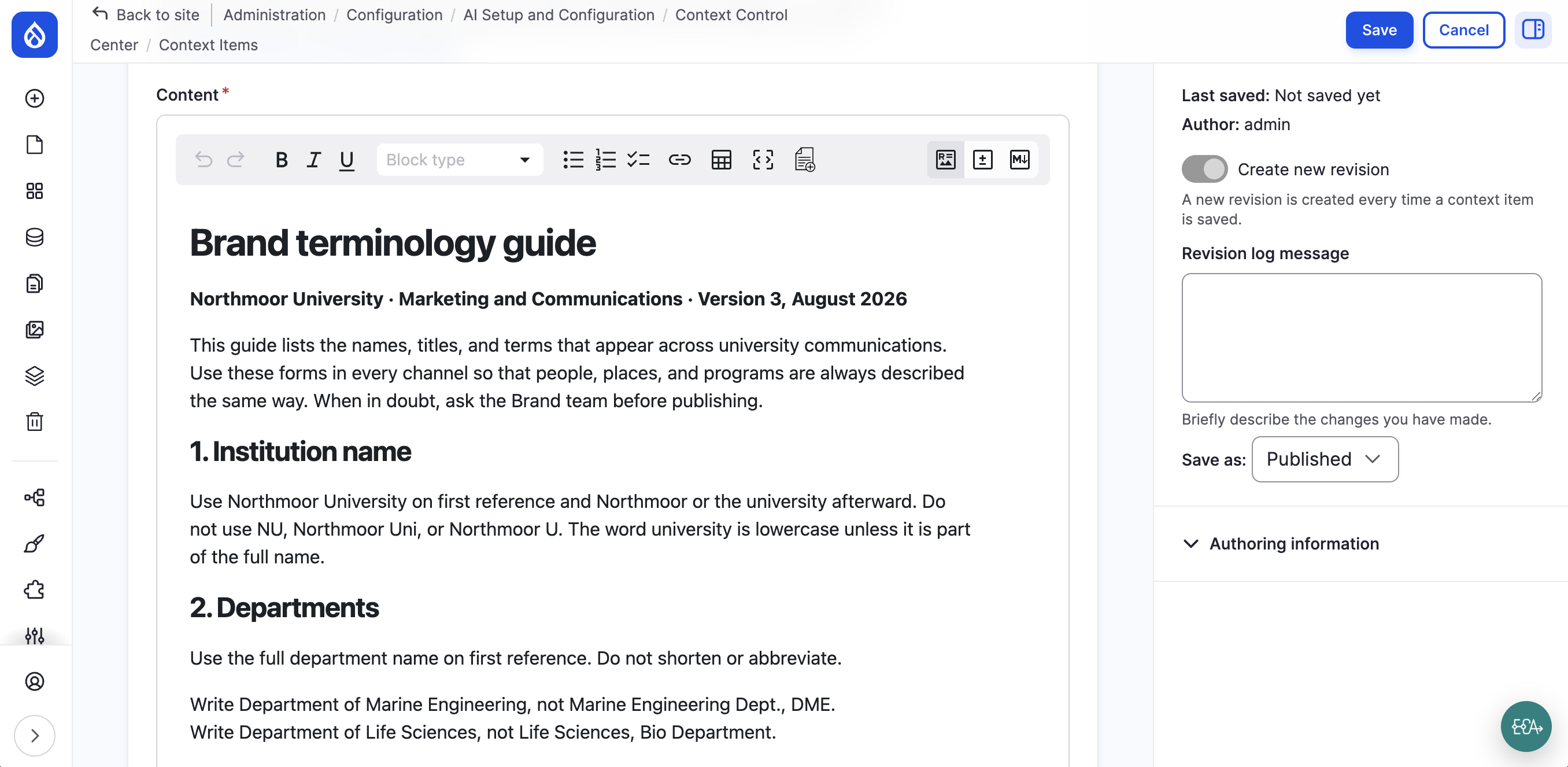
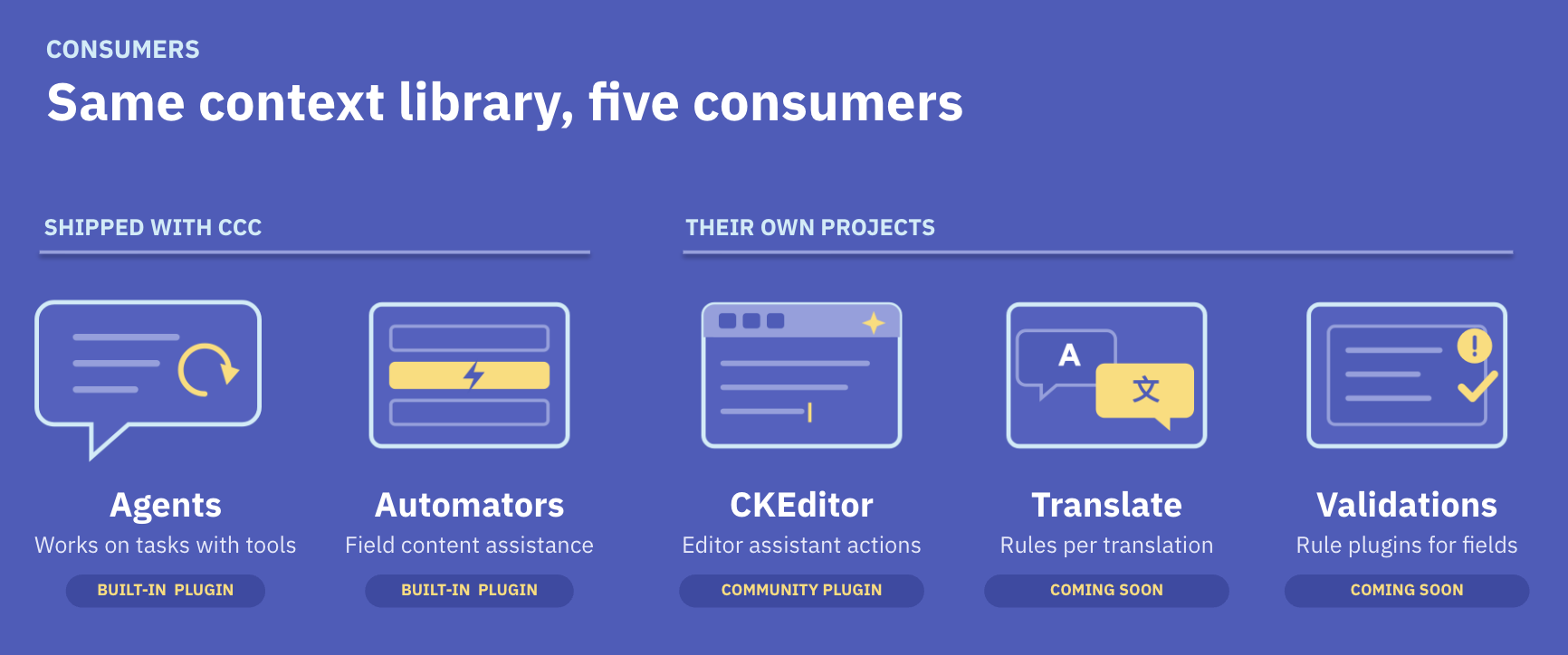
CCC helps Drupal sites provide governed, reusable context to AI-powered features, from brand voice and editorial standards to organisational knowledge, governance rules and other information that AI systems need to work effectively.
With beta 5, CCC expanded beyond AI agents to support a broader range of context consumers, including AI Automators (part of AI ), AI , AI and AI . RC 1 builds on that foundation, with the focus shifting towards reliability, usability and production readiness.
What RC 1 means for Context Control Center
A release candidate is an important transition point.
Earlier beta releases introduced and refined major capabilities across context authoring, scopes, selection, editorial workflows, document importing and context consumers.
With RC 1, the focus is now on making sure those capabilities work reliably together and addressing issues found through broader testing.
The RC 1 release includes work from more than 60 issues, concentrated across the following four areas:
The release is intended to be ready for broader pre-production testing while we continue validation ahead of 1.0.
QA and release readiness
One of the most important parts of RC 1 isn't a new feature at all.
Before creating the release candidate, the team completed a comprehensive QA pass covering:
- Context item creation
- Editorial workflows
- Context scopes
- Usage tracking
- General settings
- Consumer types
- Agent consumers
- Automator consumers
- CKEditor consumers
- Optional extensions
- Drupal 10 compatibility
- Upgrades from previous releases
This testing uncovered a number of edge cases that have now been addressed, including errors when editing agents, upgrading from earlier releases, loading markdown documents and using conditional subcontexts.
That work is a significant part of what makes RC 1 different from the beta releases. The emphasis is increasingly on how CCC behaves across real-world combinations of features and configurations.
Administration and user experience
RC 1 includes a collection of improvements designed to make larger context libraries and consumer configurations easier to manage.
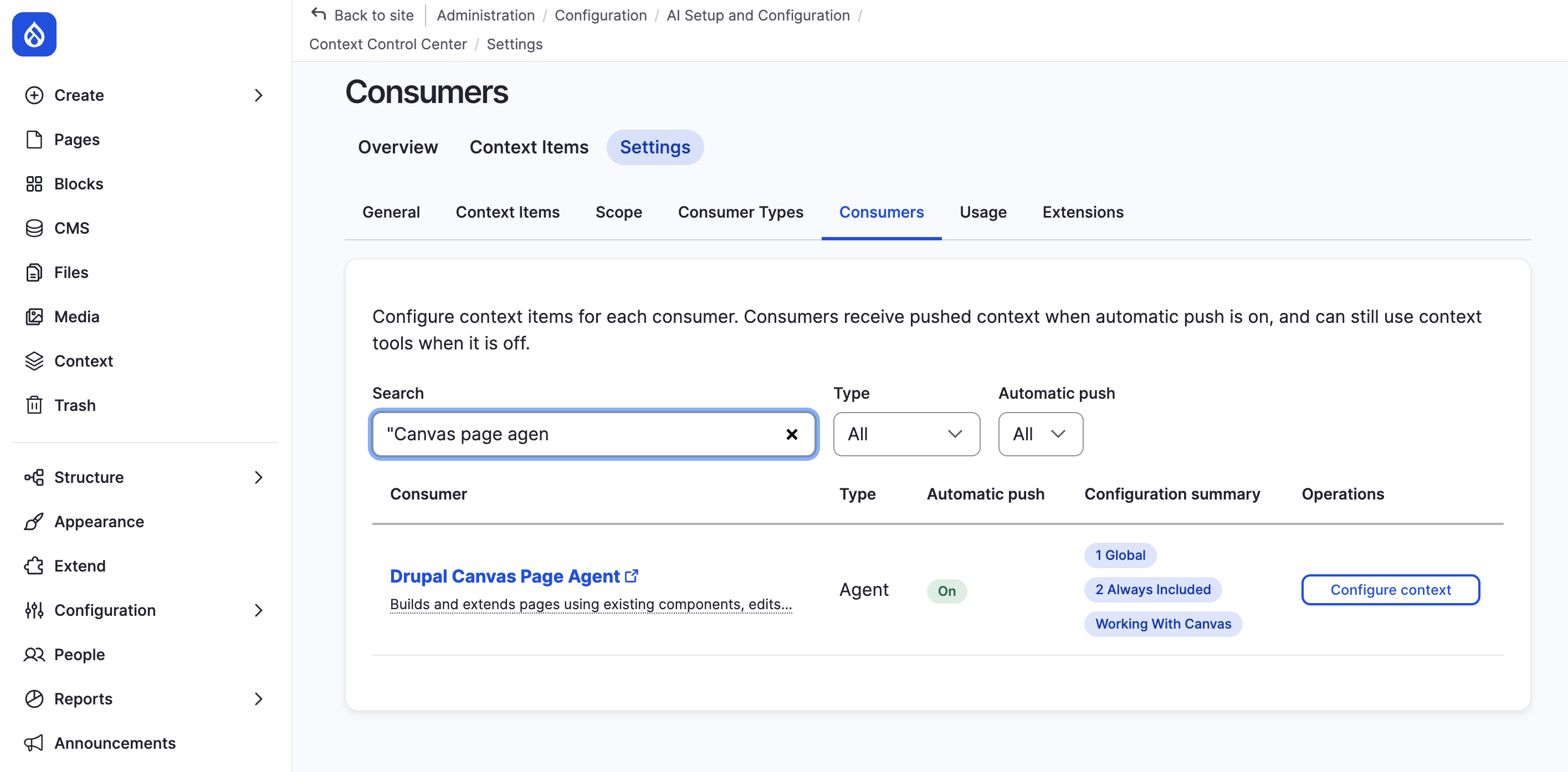
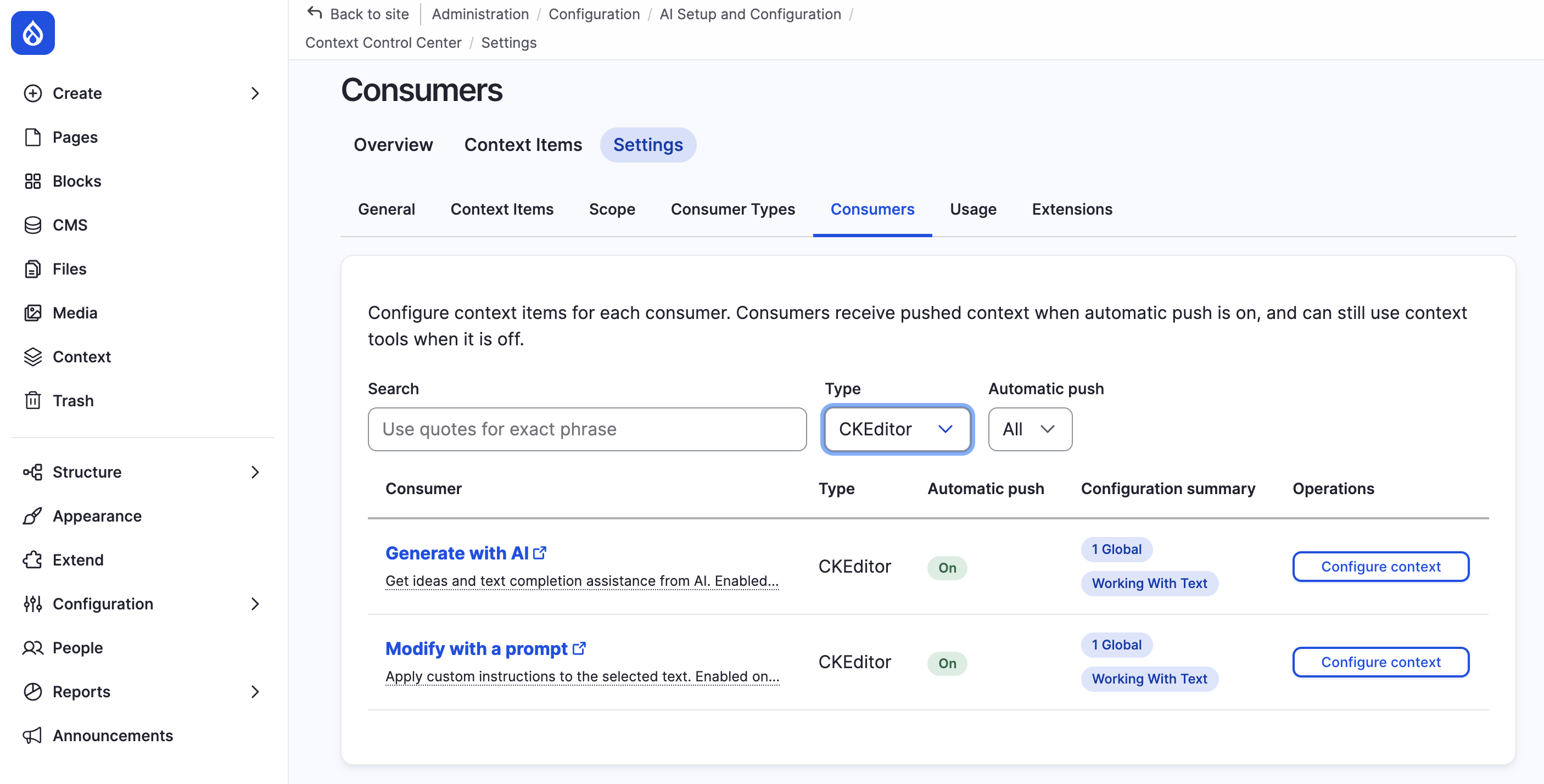
Search on both the Context items and Consumers listing pages now treats individual search words separately, making it easier to find what you're looking for.
The Consumers listing has also gained two new filters for consumer type and automatic context push, along with clearer summary information showing subscriptions and configuration.
Other improvements include:
- Improved permissions for administrators accessing the context item listing
- Clearer Automator consumer descriptions and administration links
- Better navigation between consumer types and individual consumers
- Improved handling of parent and child context items across paginated listings
These are individually small changes, but together they make CCC easier to work with as the amount of context and number of AI integrations on a site grows.
Context selection, scopes and configuration
RC 1 continues to refine how context is selected, scoped and delivered to different consumers.
Consumer types can now inherit the site's default context selection mode. This makes it easier to establish a consistent, site-wide approach while still allowing individual consumers to override that behaviour when needed.
Situational scopes have also been fixed for API-proxy consumers such as CKEditor, helping ensure that context based on the current page or entity is resolved correctly outside traditional Drupal page requests.
Tag and taxonomy scope values are now stored using entity universally unique identifiers (UUIDs), making configuration more portable between environments.
Together, these changes help make context behaviour more predictable across consumers and make CCC configuration easier to move between development, staging and production environments.
Performance, compatibility and upgrade stability
RC 1 also includes work focused on making CCC more robust across different site configurations and upgrade paths.
Performance improvements avoid scanning every published context item during subscribed-scope pre-filtering, helping CCC scale more efficiently as context libraries grow.
The release also addresses a range of compatibility and upgrade issues uncovered during QA, including problems moving from earlier beta releases and issues affecting Drupal 10 installations.
A number of runtime edge cases have also been addressed across context loading, consumer configuration and conditional context behaviour.
These improvements are particularly important at the release candidate stage, where the focus shifts from adding major capabilities to making sure the existing system behaves reliably in production-like environments.
From beta to 1.0
RC 1 follows a significant period of development across the beta releases.
Over the course of the beta cycle, CCC has grown from context management primarily for AI agents into a broader context layer for Drupal AI.
It now provides capabilities including:
- Centrally managed, reusable context items
- Context scopes for relevance control
- Global, automatic and consumer-specific context
- Pluggable context consumer system
- Token-aware context selection and prioritisation
- Context selection mode ladder with overrides
- Parent and child subcontext support
- Editorial workflows and access controls
- Multilingual context support
- Document and webpage content importing
- Usage tracking and debug logging
- APIs and extension points for Drupal
RC 1 is about making sure those pieces work together reliably.
Community integrations
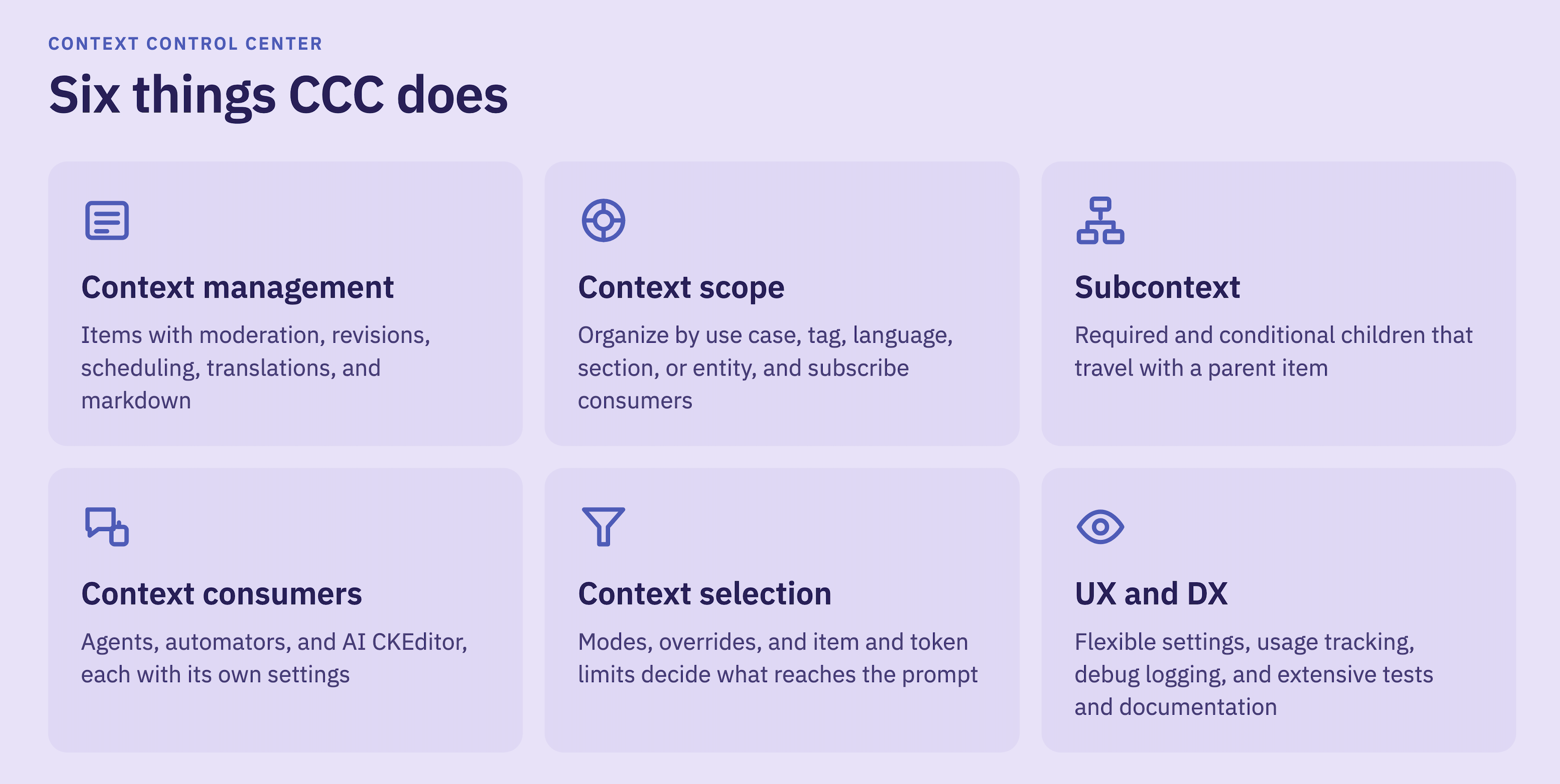
The move to a generic consumer approach in beta 5 was designed to make CCC useful across the wider Drupal AI ecosystem.
We're already seeing that approach adopted by other modules, with AI CKEditor integration released and further integrations in review for AI Translate and AI Validations.
AI CKEditor
AI CKEditor integration landed in , allowing its AI-powered editing tools to use centrally managed CCC context.
The module has since progressed to , with further improvements to the integration, including passing the current content bundle and page path as entity context.
This means guidance managed in CCC can be applied more intelligently to AI-assisted content editing without having to duplicate it in individual CKEditor prompts.
AI Translate
AI Translate is being integrated with CCC so translation workflows can receive the same centrally-managed context as other consumers. This could include glossaries, do-not-translate terminology or other instructions that should remain consistent across translated content.
The work is being tracked in Create AI Translate CCC context consumer . We welcome your feedback and contribution to this issue.
AI Validations
AI Validations is also adding CCC integration. This plugin will allow individual AI validation rules to subscribe to relevant context, rather than requiring site builders to duplicate guidance inside each validation prompt.
This work is being tracked in Add an AI Context consumer type for validation . We also welcome your reviews and testing for this issue.
Together, these integrations demonstrate the broader direction for CCC: context can be managed once and then made available to the Drupal AI features that need it, instead of each integration maintaining its own isolated instructions.
Help test RC 1
Community testing is particularly valuable during the release candidate stage.
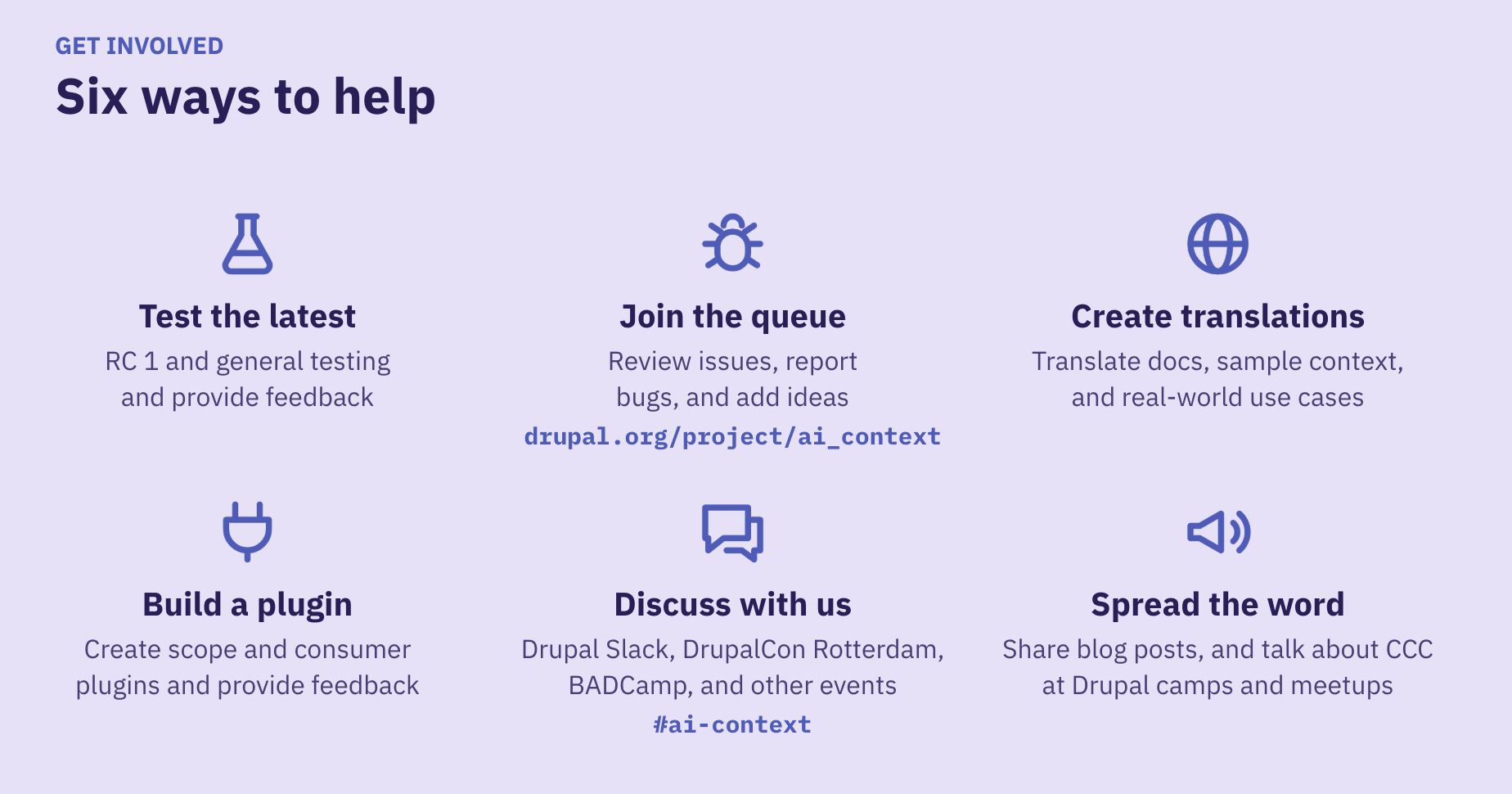
If you're already using an earlier version of CCC, upgrading to RC 1 and testing your existing configuration can help uncover issues that only appear in real-world sites.
Testing is especially useful around:
- Upgrades from previous releases
- Drupal 10 installations
- Context selection and scopes
- Agent and automator consumers
- Configuration export and import
- Document loading and URL imports
- Parent and child context items
- Sites with larger context libraries
We'd also especially welcome testing with the growing set of community integrations as well as creating your own custom or community scope and consumer plugins.
If you're using AI CKEditor, try applying centrally-managed CCC context to real editorial workflows and check that the expected context is selected in different content and page scenarios. Similar testing is also valuable for the AI Translate and AI Validations in-progress integrations.
Real-world feedback on how context is integrated with community modules will help ensure CCC works well not just in isolation, but as shared infrastructure across the Drupal AI ecosystem.
Full technical details are available in the Drupal AI Context 1.0.0-rc1 release . As always, issues and feedback can be submitted through the AI Context issue
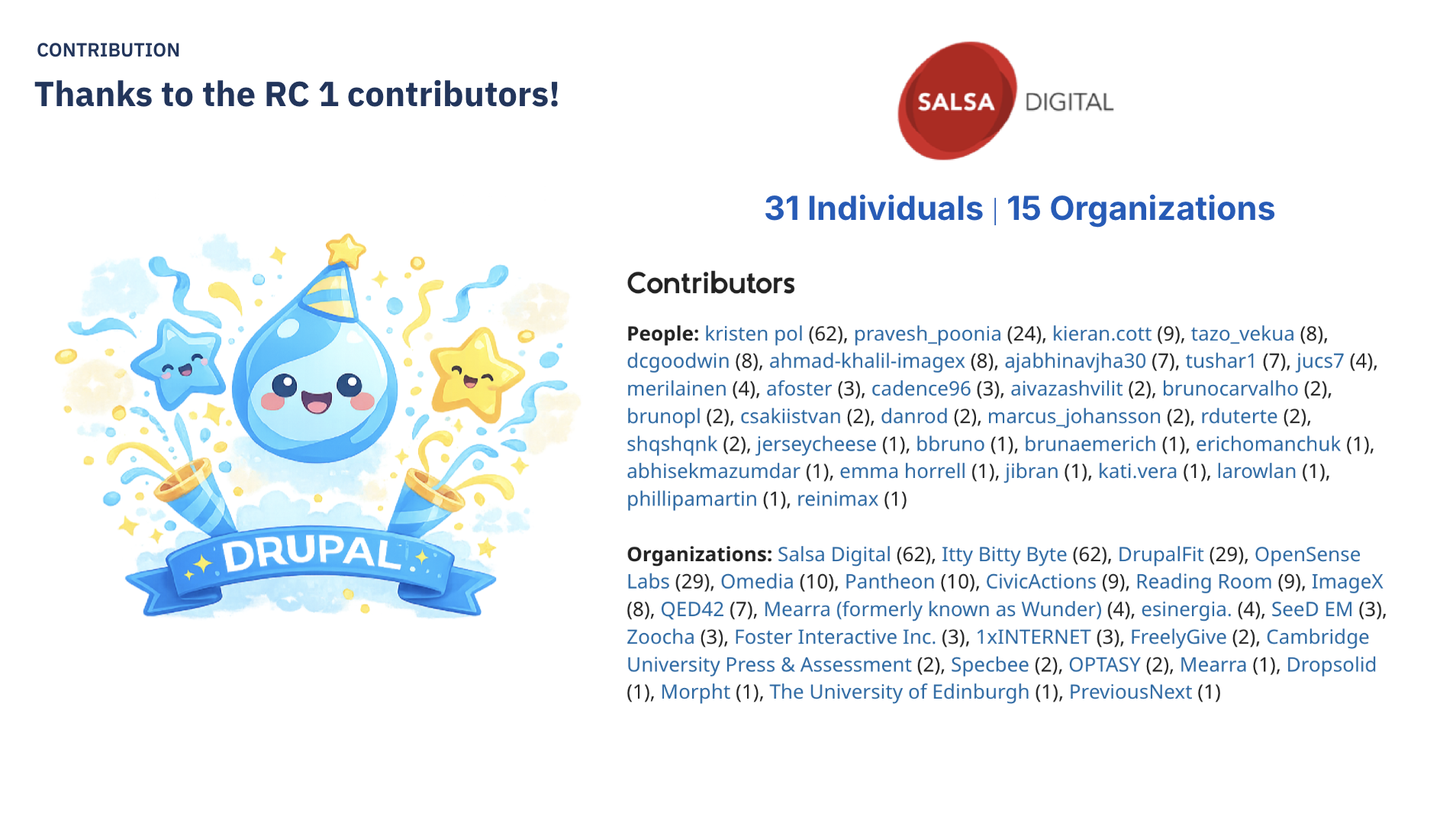
Thanks to the contributors
Reaching the first release candidate has been a substantial community effort.
RC 1 includes contributions across development, testing, QA, reviews, documentation, UX and release coordination from contributors and organisations throughout the Drupal community. Thank you to everyone who has tested CCC, reported issues, contributed code, reviewed changes, improved documentation or helped shape the project through feedback.
A special thanks to:
- The top 10 contributors for this release:
Kristen , Pravesh , Kieran , Tazo , Dan , Ahmad , Abhinav , Tushar , Juan and Joonas . - Marcus for presenting on CCC at the DrupalCon Rotterdam AI Dev
- Emma and Jamie for presenting on CCC at the main DrupalCon
- Aidan and Emma for context creation for the new Drupal AI
The complete contributor list and the issue breakdown are available in the RC 1 release and the RC 1 .
Next stop: 1.0
RC 1 brings Context Control Center to the final stretch towards its first stable release.
We'll be using the release candidate period to continue testing, address any release-blocking issues that emerge and prepare for CCC 1.0, currently planned for about a month from now. There may be an RC 2 release before 1.0.
At the same time, integrations across AI CKEditor, AI Translate and AI Validations show how the consumer ecosystem can continue expanding without each feature needing to reinvent how it manages context.
After a year of building, testing and refining how Drupal can manage context for AI, reaching RC 1 is an exciting milestone, and 1.0 is now close. We welcome your testing and feedback to make it even better.