
On this page:
- Beta 3 release of Drupal AI Context
- What’s new in AI Context beta 3
- Context importing and authoring
- Context selection and agent controls
- Administration and user experience
- Simpler architecture and optional features
- Performance, security and extensibility
- Upgrading to beta 3
- Help test Drupal AI Context
- Thanks to the contributors
- About AI Context

Beta 3 release of Drupal AI Context
Beta 3 of Drupal AI , also known as Context Control Center (CCC), is now available.
CCC helps Drupal sites provide governed, reusable context for AI workflows and agents, from brand voice and editorial standards to organisational knowledge and governance rules. This gives AI systems access to more structured and relevant information while allowing teams to manage that information centrally.
Following the beta 2 release, beta 3 expands how context is authored, imported, selected and extended. It also introduces redesigned administration pages, more granular agent controls and broader integration options.
More than 100 issues were completed for the release, including contributions across development, testing, design, accessibility, security, documentation and release coordination.
What’s new in AI Context beta 3
Beta 3 includes major improvements across the following 5 areas:
- Context importing and authoring
- Context selection and agent controls
- Administration and user experience
- Simpler architecture and optional features
- Performance, security and extensibility
These changes strengthen CCC’s foundations as the project moves towards release candidate status.
Context importing and authoring
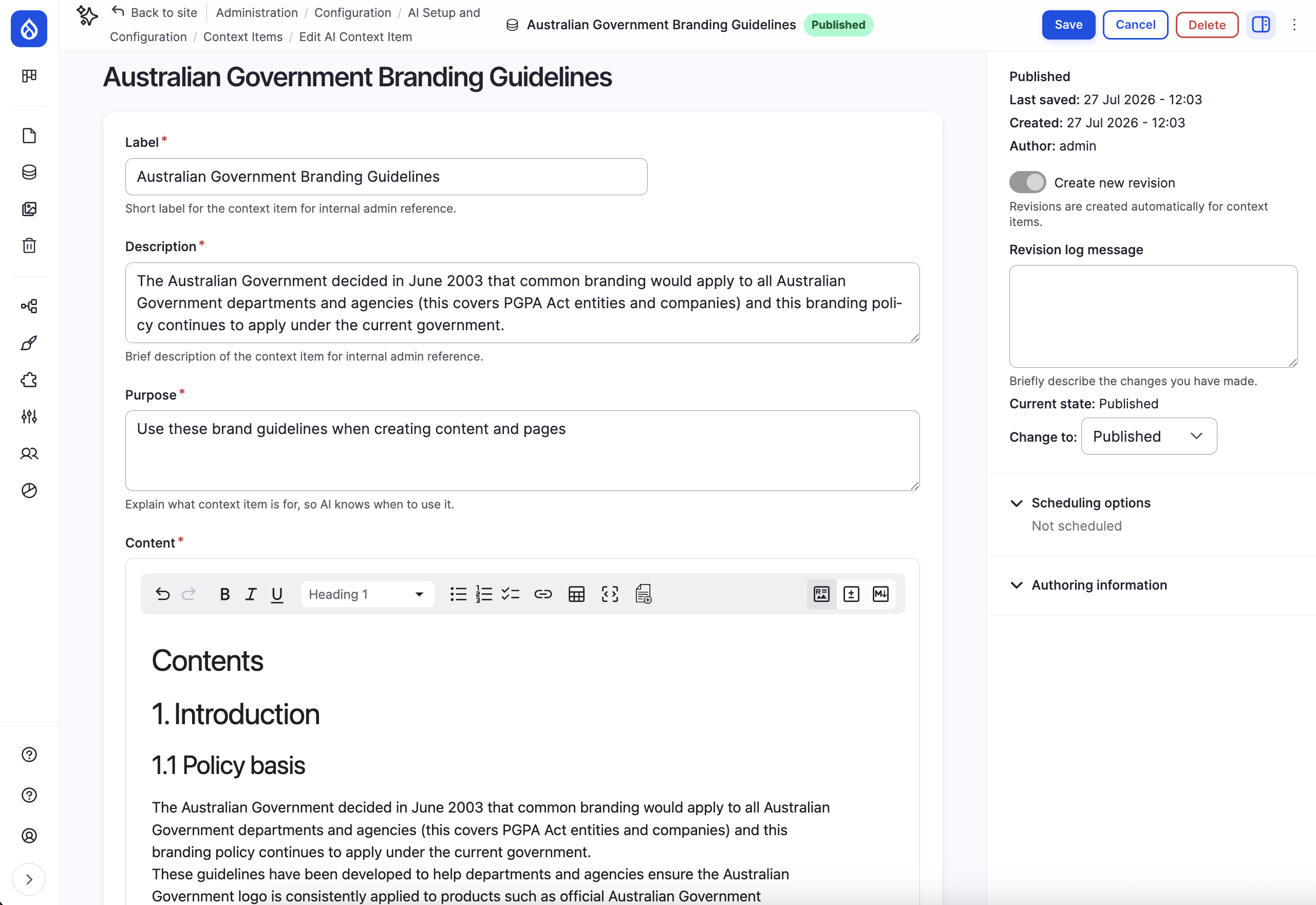
Beta 3 makes it easier to bring existing organisational knowledge into CCC.
New context source plugins and optional integrations support content from:
- Plain text
- Markdown
- PDF documents
- Word documents
- Spreadsheets
- Web pages
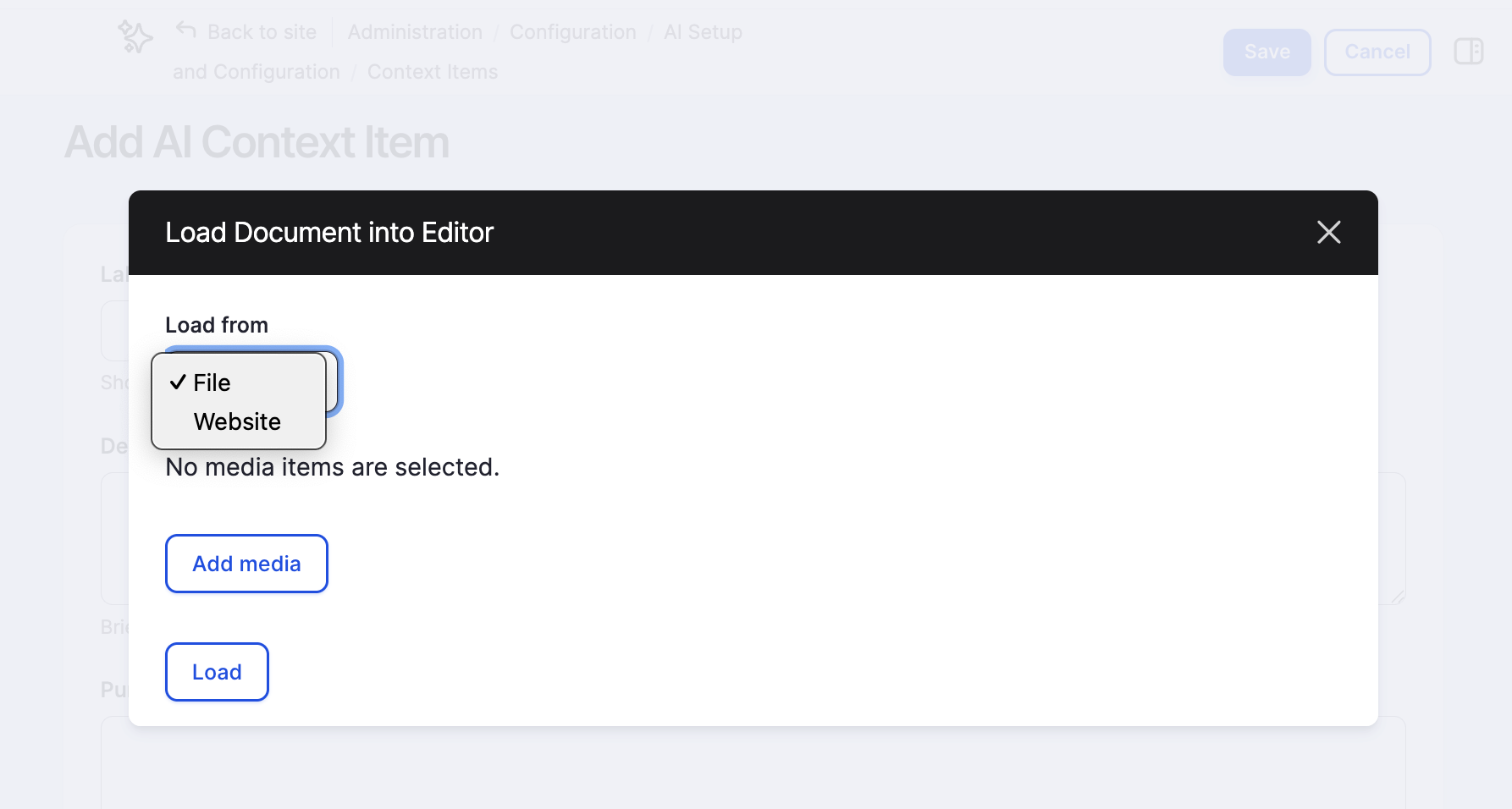
A new experimental Document Loader submodule supports richer document workflows, including Markdown imports through Drupal media. Note that this submodule will not be experimental in beta 4.
These capabilities make it easier for teams to reuse existing policies, product information, editorial guidance and other knowledge without recreating everything manually.
Context selection and agent controls
Beta 3 introduces more control over how context is selected and supplied to AI agents.
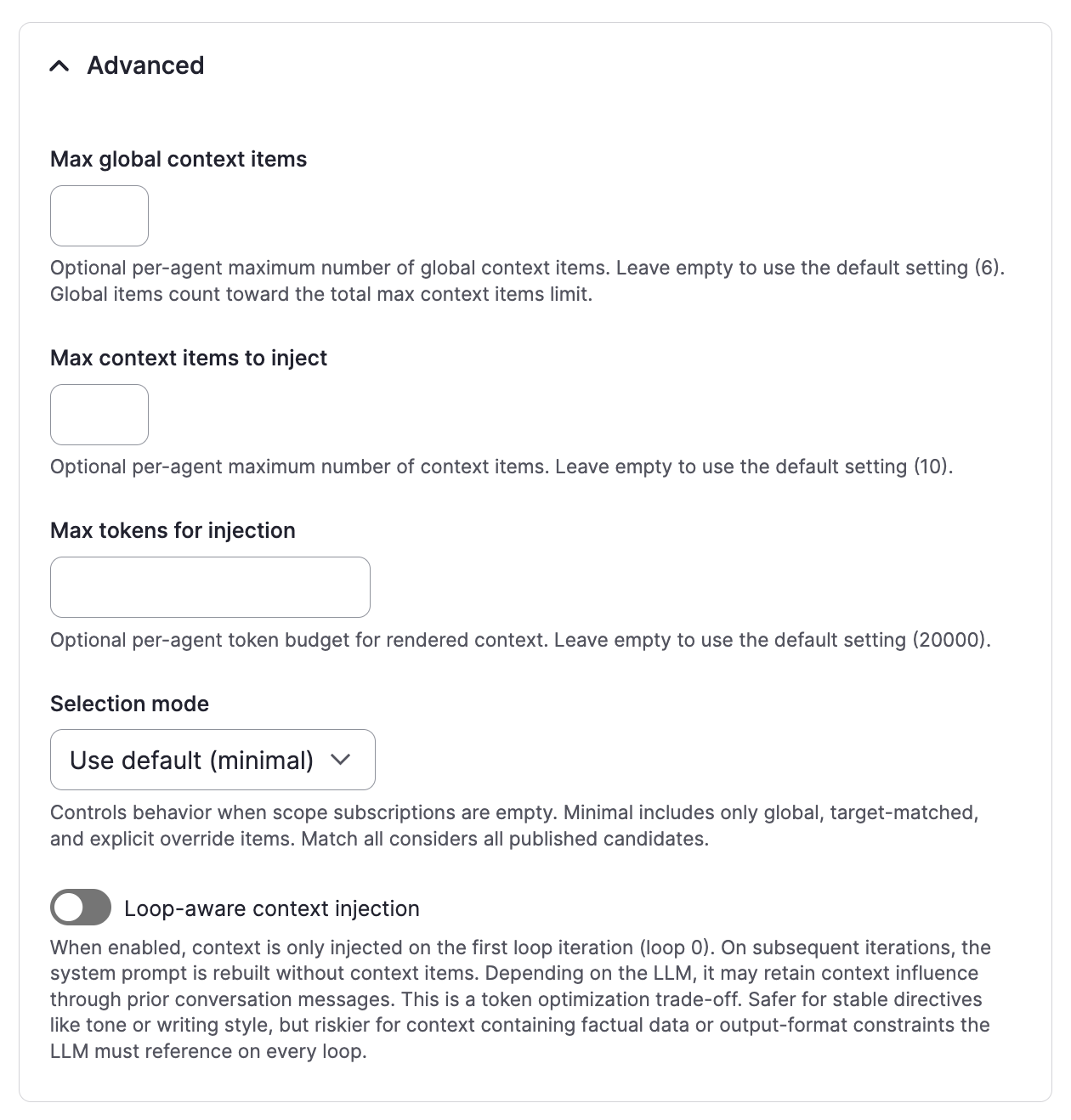
New per-agent settings allow administrators to configure:
- Maximum global context items
- Maximum total context items
- Token limits
- Minimal or match-all selection behaviour
- Agent-specific overrides of global defaults
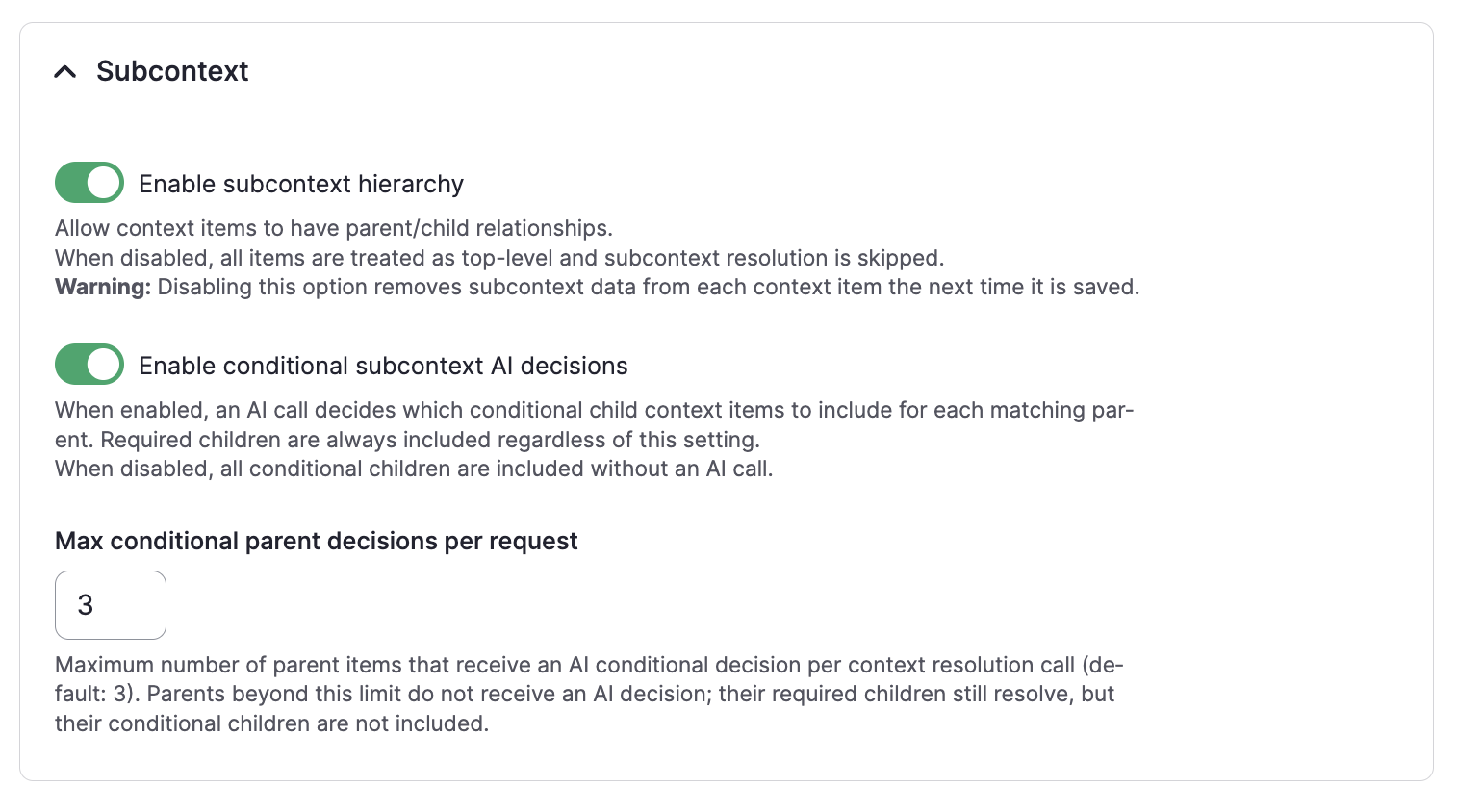
Conditional subcontext selection can use AI to determine which child context items are relevant to a request. Child items can also override inherited parent scope, allowing more precise targeting in complex context hierarchies.
A stable selection pipeline now provides post-selection and post-render events. These extension points give developers supported ways to inspect or modify context selection without depending on internal implementation details.
Administration and user experience
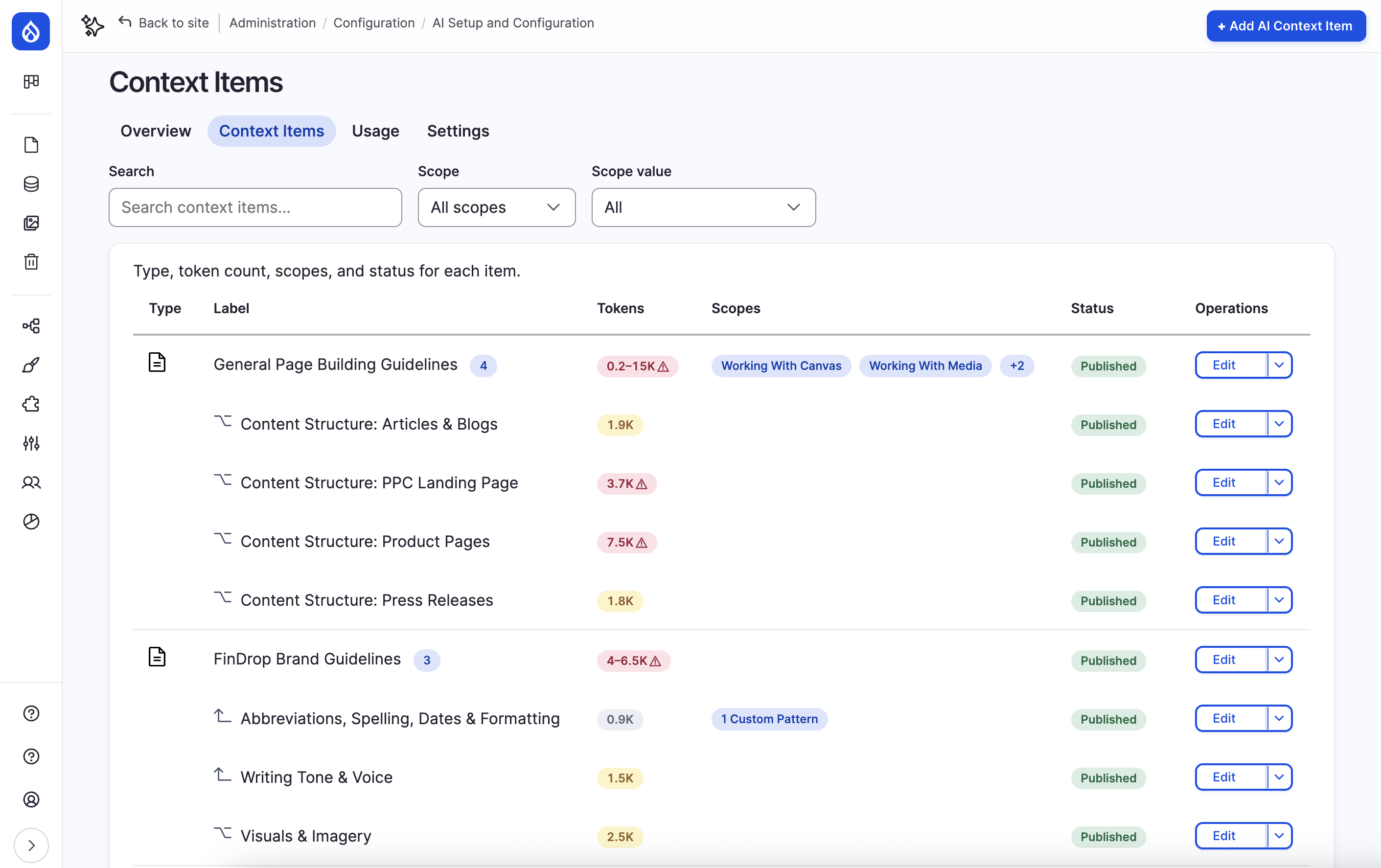
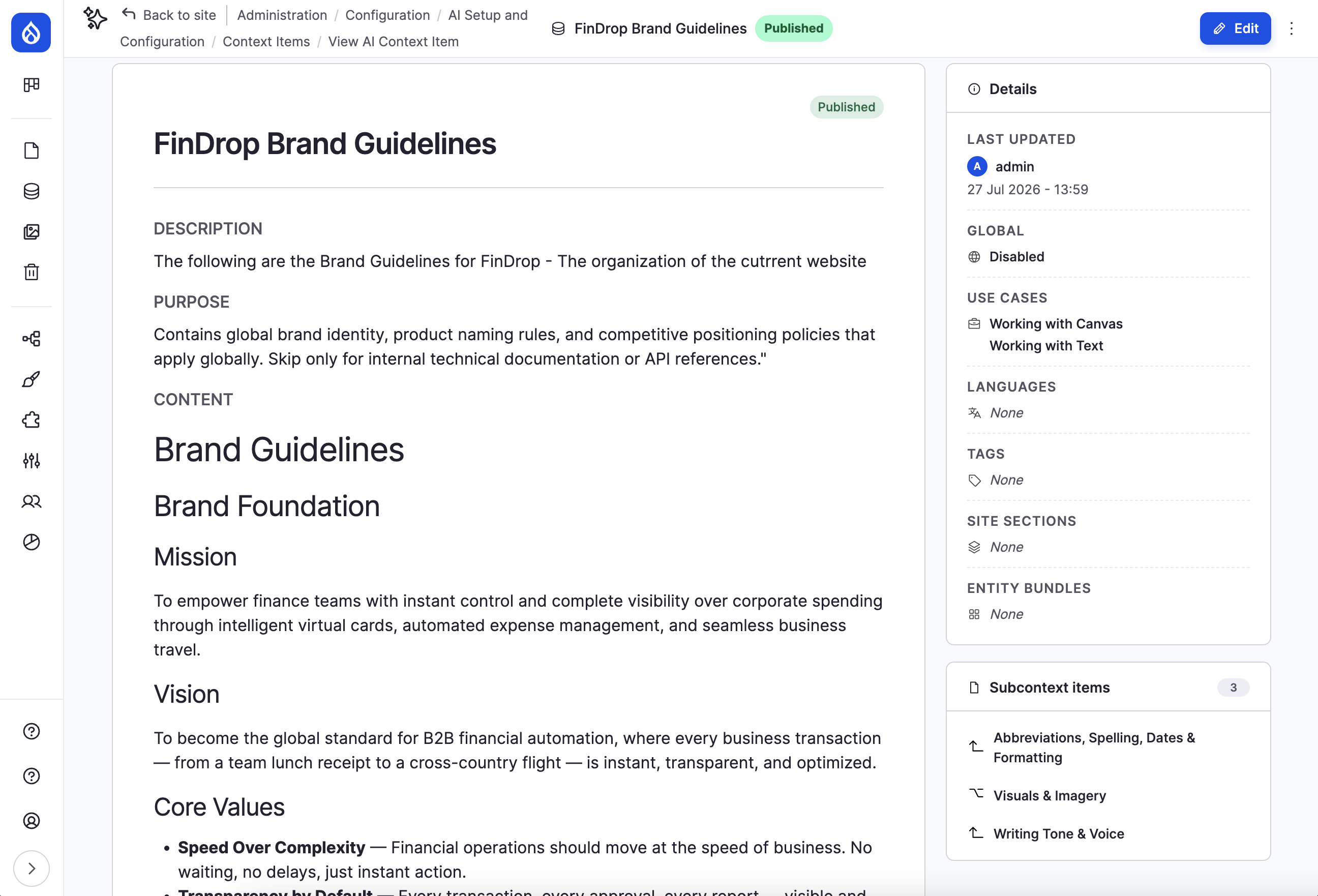
The context listing and full item view pages have been redesigned to make important information easier to understand.
Administrators can now see details such as:
- Workflow and publication status
- Context scope
- Parent and child relationships
- Estimated token usage
- Relevant operations and management links
The release also improves scope forms, filtering feedback, table accessibility and consistency across administration pages.
CCC administration has moved from `/admin/ai/context` to `/admin/config/ai/context`, placing it alongside other Drupal AI configuration pages. Integrations containing hard-coded routes should be updated.
Simpler architecture and optional features
Beta 3 simplifies the context item content model by making context items bundleless.
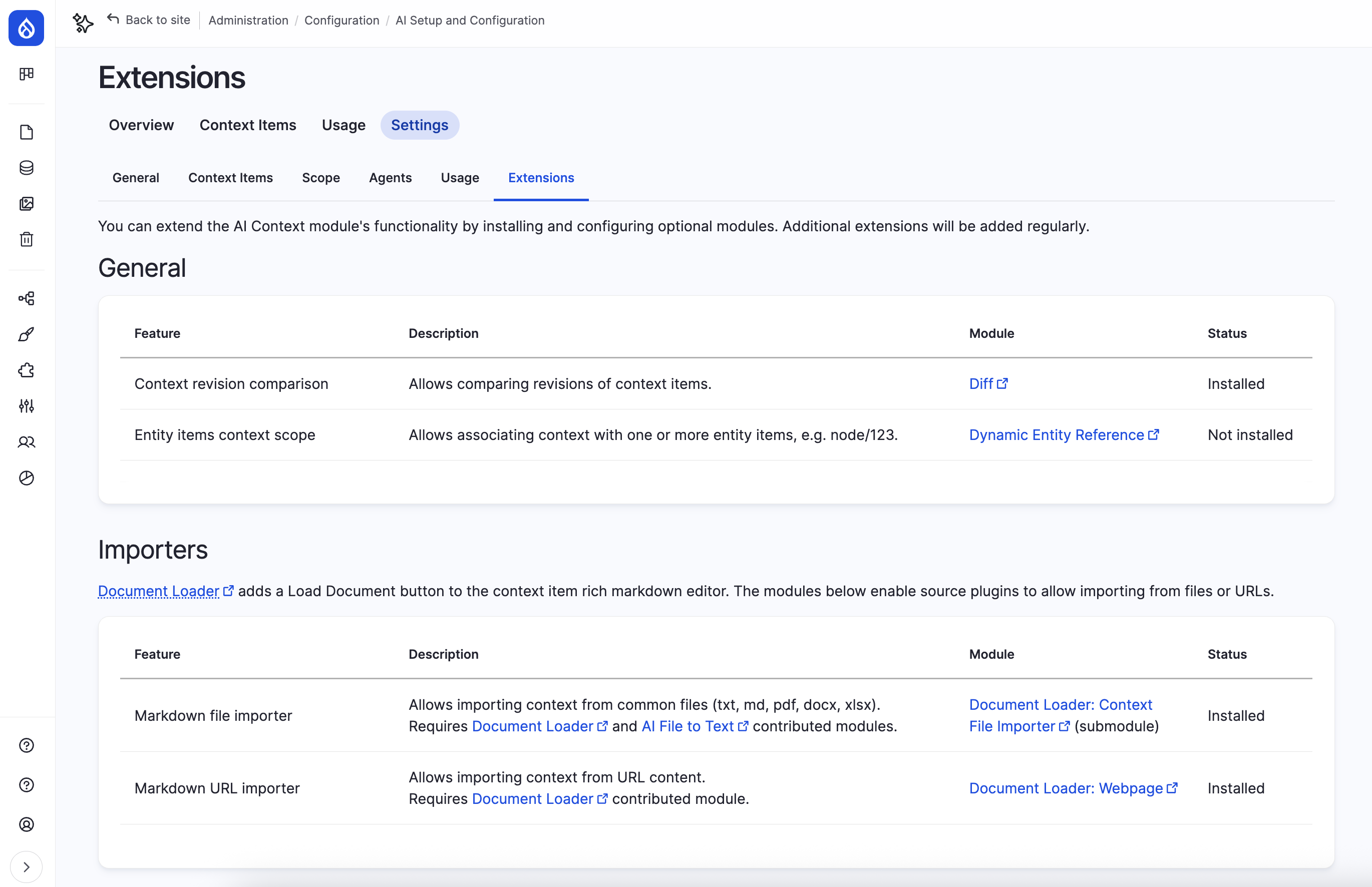
Scheduler is now optional, reducing the number of dependencies required by sites that do not need scheduled publication. Optional feature suggestions in the administration interface help teams discover additional capabilities without requiring them for every installation.
The new Extensions settings page brings this together in one place. It lists optional integrations such as document importers, revision comparison, and entity targeting, and shows what additional modules or configurations are needed to enable them.
New installations also:
- Disable usage tracking by default
- Increase the default total context limit from 5 to 10
- Enable conditional subcontext selection by default
Performance, security and extensibility
Performance work in beta 3 reduces unnecessary processing during context selection and usage tracking.
Highlights include:
- Narrower candidate scans
- Batched usage-tracking queries
- Improved request-level scope performance
- Better selection cacheability
- Avoidance of full-catalog loading when an agent has no scope subscriptions
Security and access-control improvements prevent context item content or management links from appearing when a user doesn’t have the required access.
The release also includes accessibility improvements for interactive links, forms, tables and JavaScript feedback, alongside expanded automated testing and CI checks.
Upgrading to beta 3
Existing sites should run Drupal’s database updates after upgrading.
Beta 3 includes update hooks that:
- Convert context item fields from `text_long` to `string_long`
- Remove the previous context item bundle configuration
- Update renamed use-case and provider configuration values
Teams should test upgrades in a non-production environment, particularly when using custom integrations, imported configuration or hard-coded CCC administration routes. As we’re still in beta, it’s not recommended to use CCC in production.
Full technical details are available in the beta 3 release .
Help test Drupal AI Context
We’re looking for broader community testing and feedback as CCC moves towards its first release candidate.
Areas where testing is particularly valuable include:
- Upgrades from earlier beta releases
- Document and webpage imports
- Agent-specific context limits
- Conditional subcontext selection
- Scope inheritance and overrides
- Multilingual and moderation workflows
- Selection performance on larger context libraries
- Custom integrations using the new extension events
- Accessibility and administration workflows
Issues and feedback can be submitted through the AI Context issue .
Thanks to the contributors
Beta 3 represents a substantial community effort, with more than 100 issues and contributions spanning development, testing, reviews, design, UX, accessibility, security, documentation and coordination.
Thank you to the many individual contributors and supporting organisations that helped deliver the release, and a special thanks to the top 10 contributors: Kristen , Matt , Aidan , Emma , Rob , Daniel , Ahmad , Ahmad , Abhishek and Joshua .
The complete contributor list and the issue breakdown are available in the beta 3 release and the beta 3 .
About AI Context
Drupal AI Context, also known as Context Control Center, is a Drupal module for providing governed, reusable context to AI-powered workflows and agents.
CCC allows organisations to centrally manage information such as brand voice, editorial standards, governance rules, product information and organisational knowledge so AI systems can produce more consistent, accurate and trustworthy outputs.
The project supports scoped context, subcontexts, moderation workflows, multilingual content, usage tracking, document imports and integrations with the broader Drupal AI ecosystem.